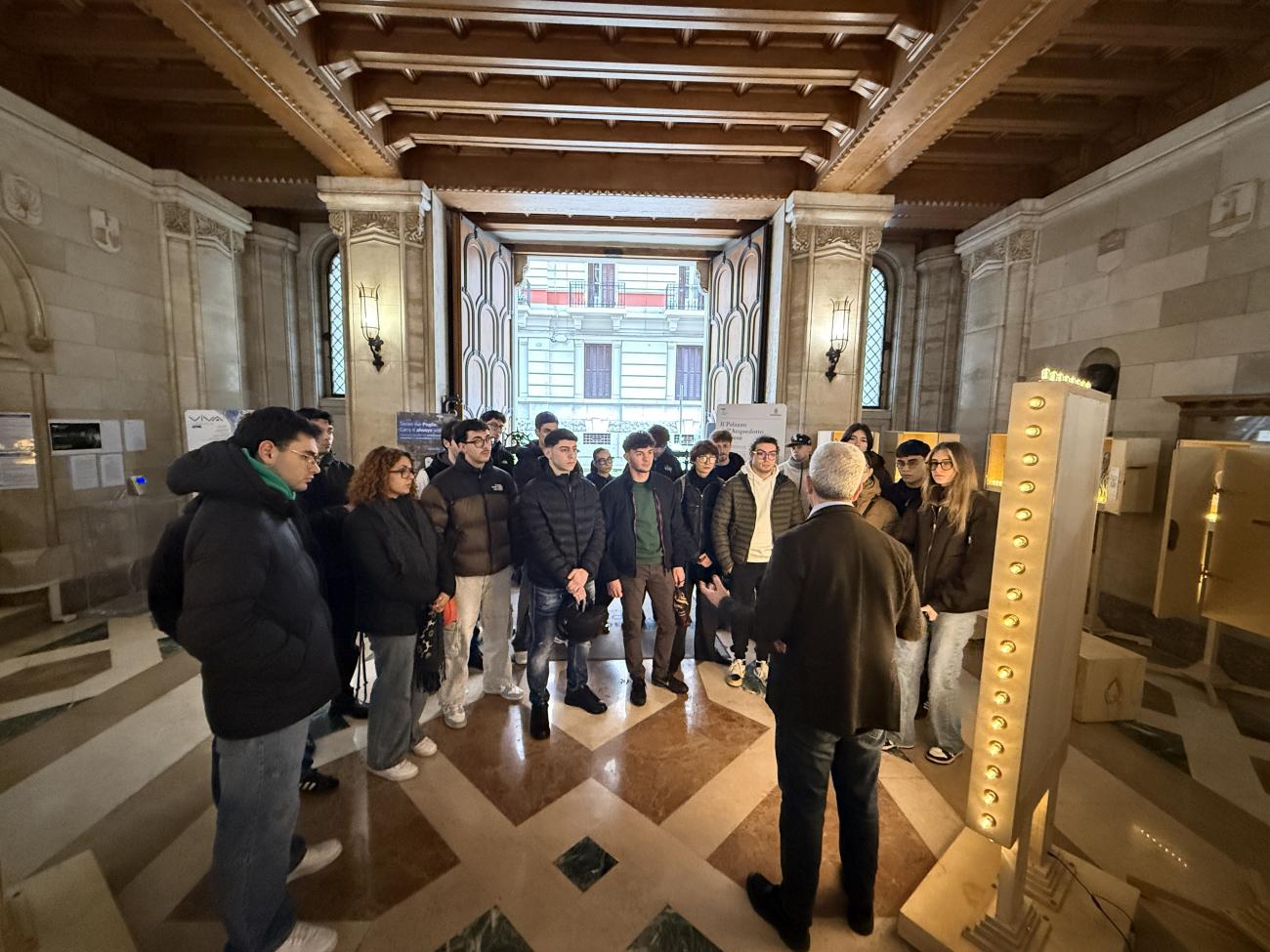
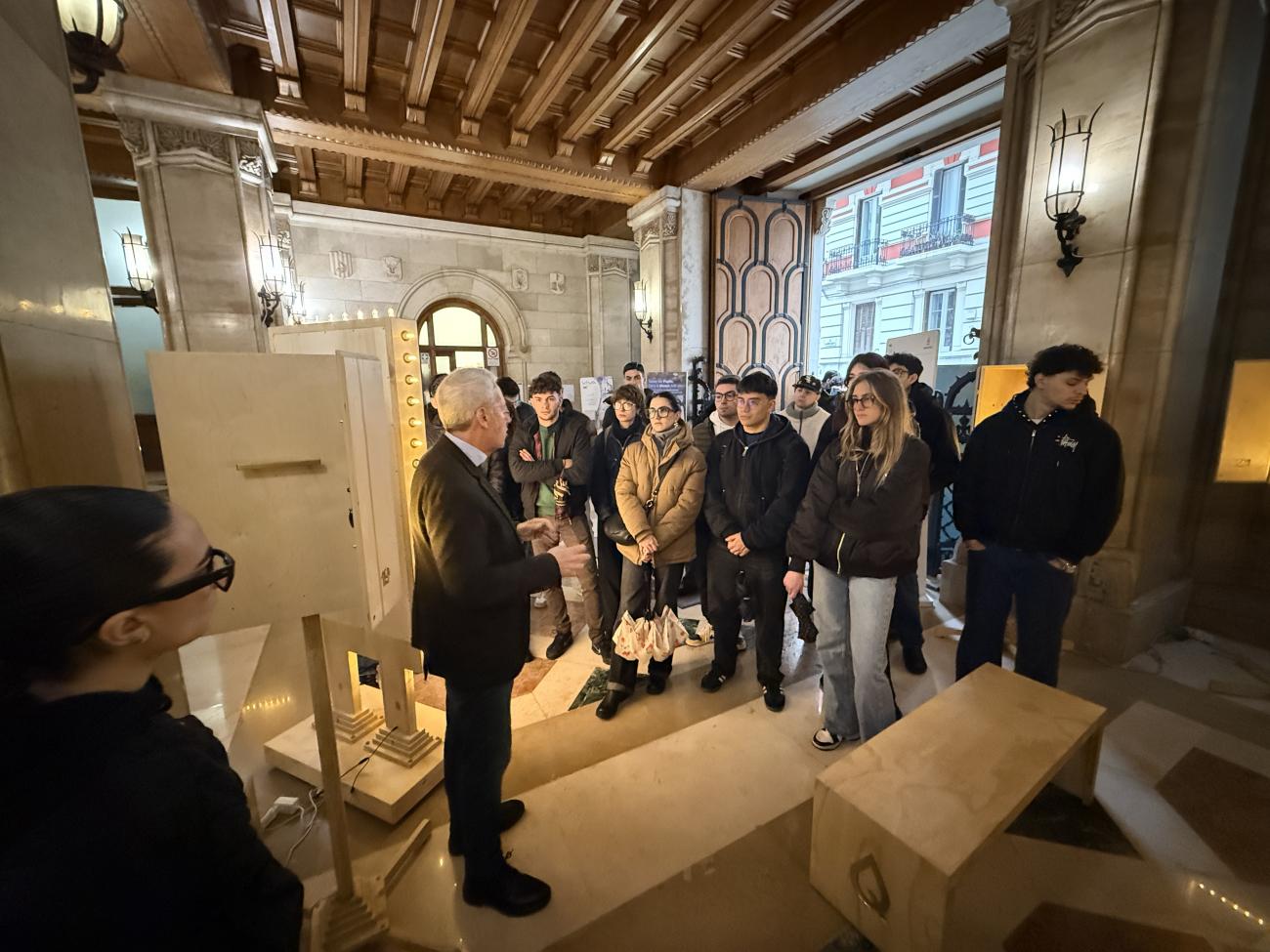
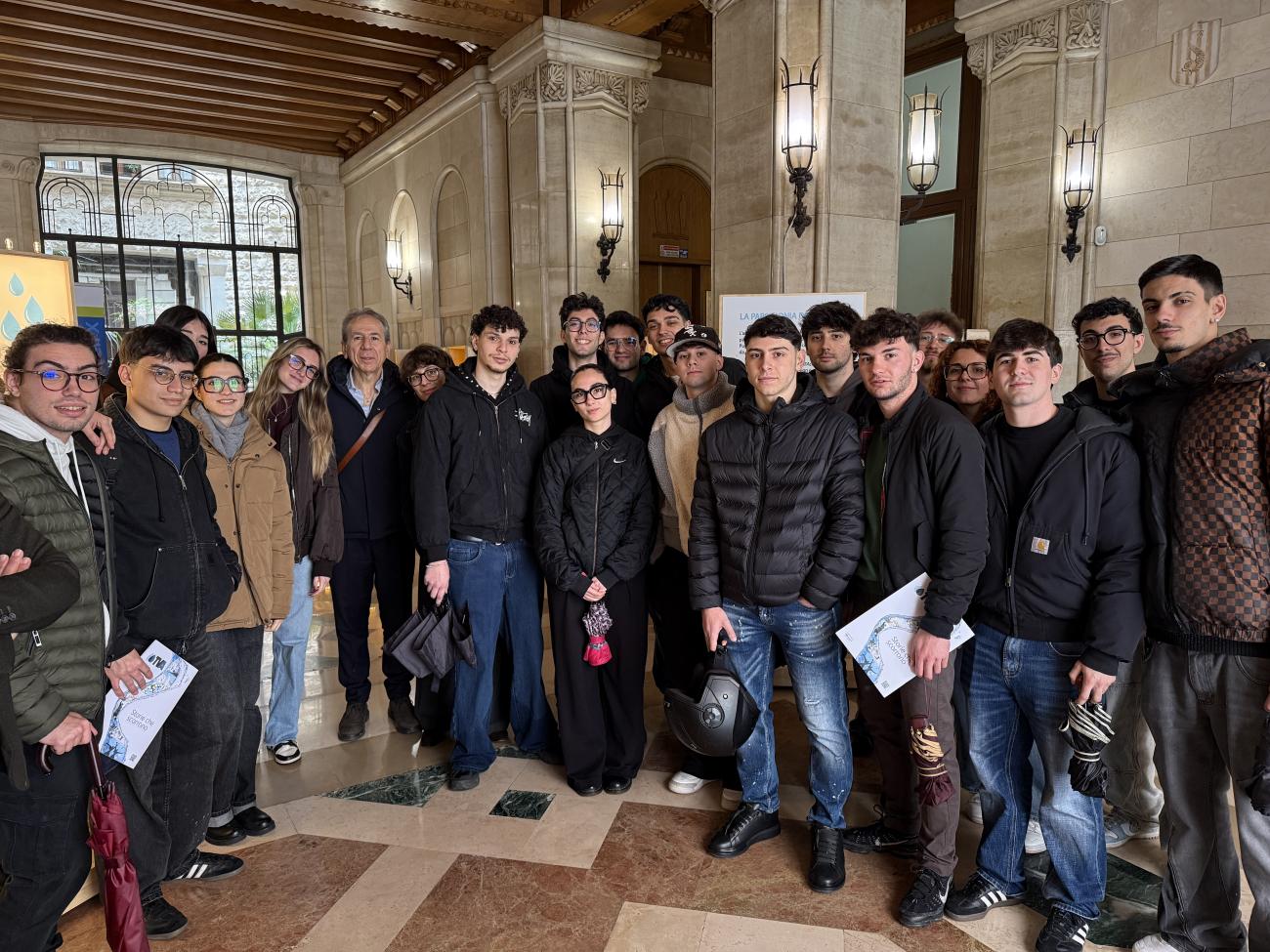
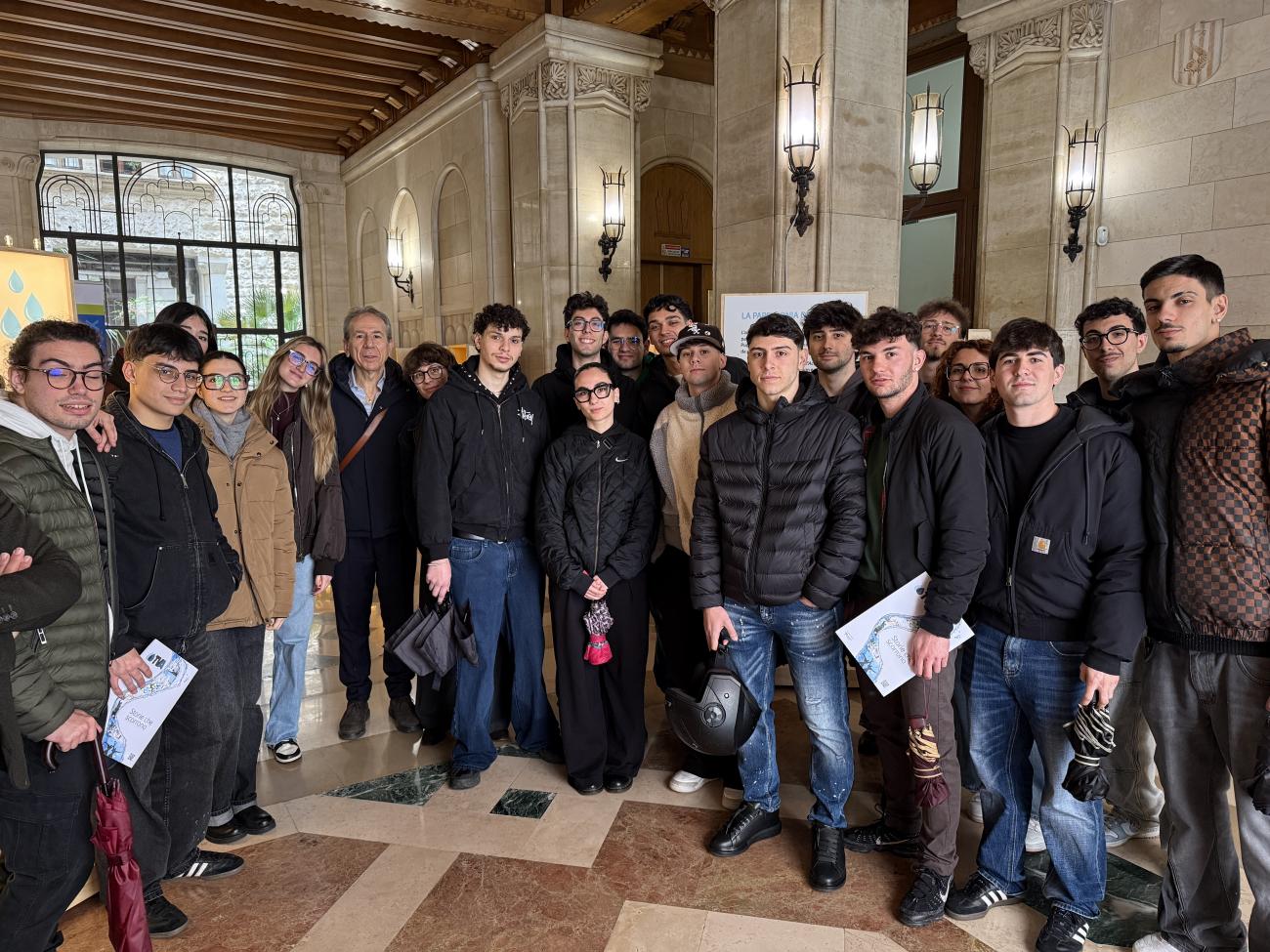
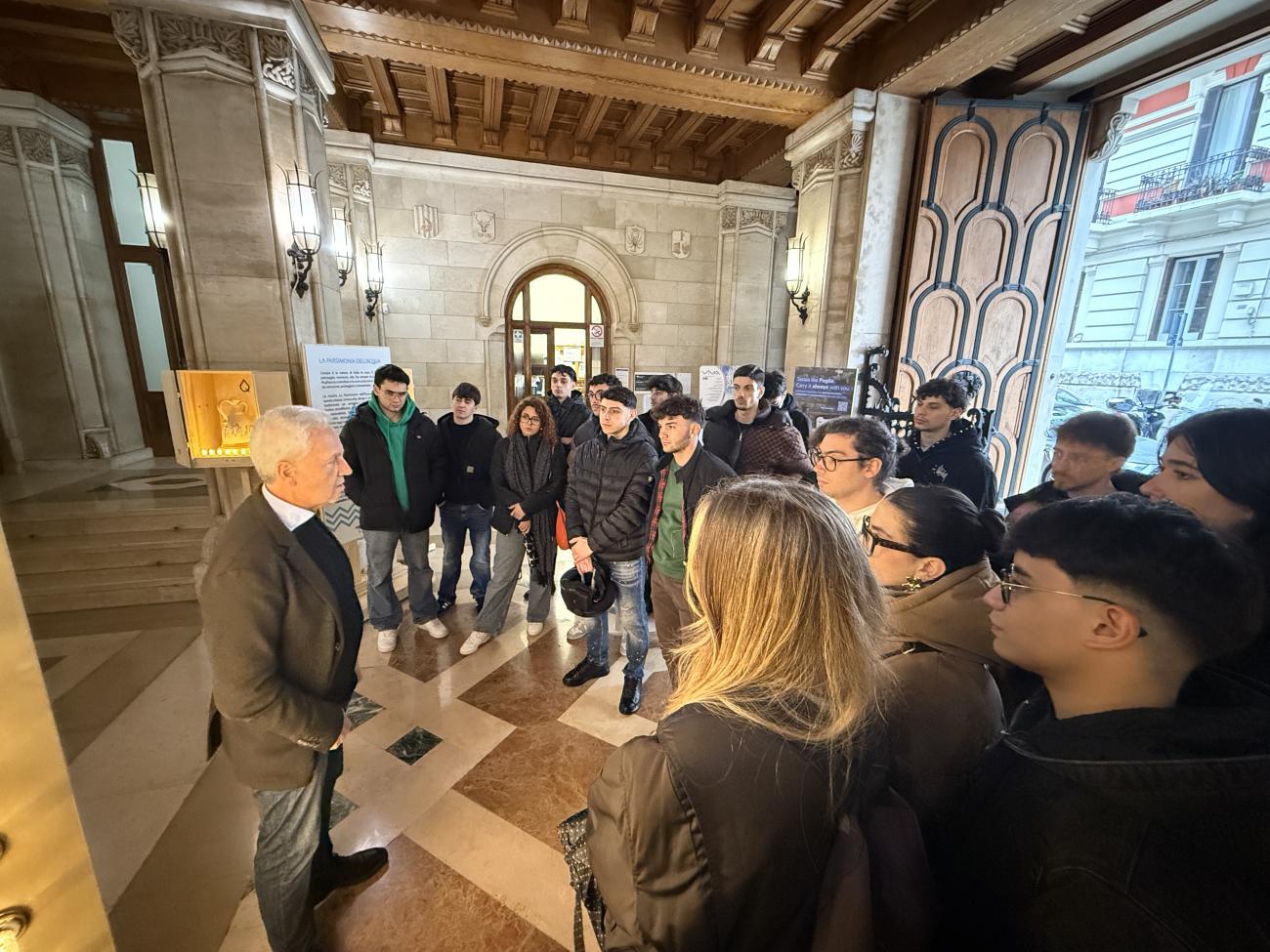
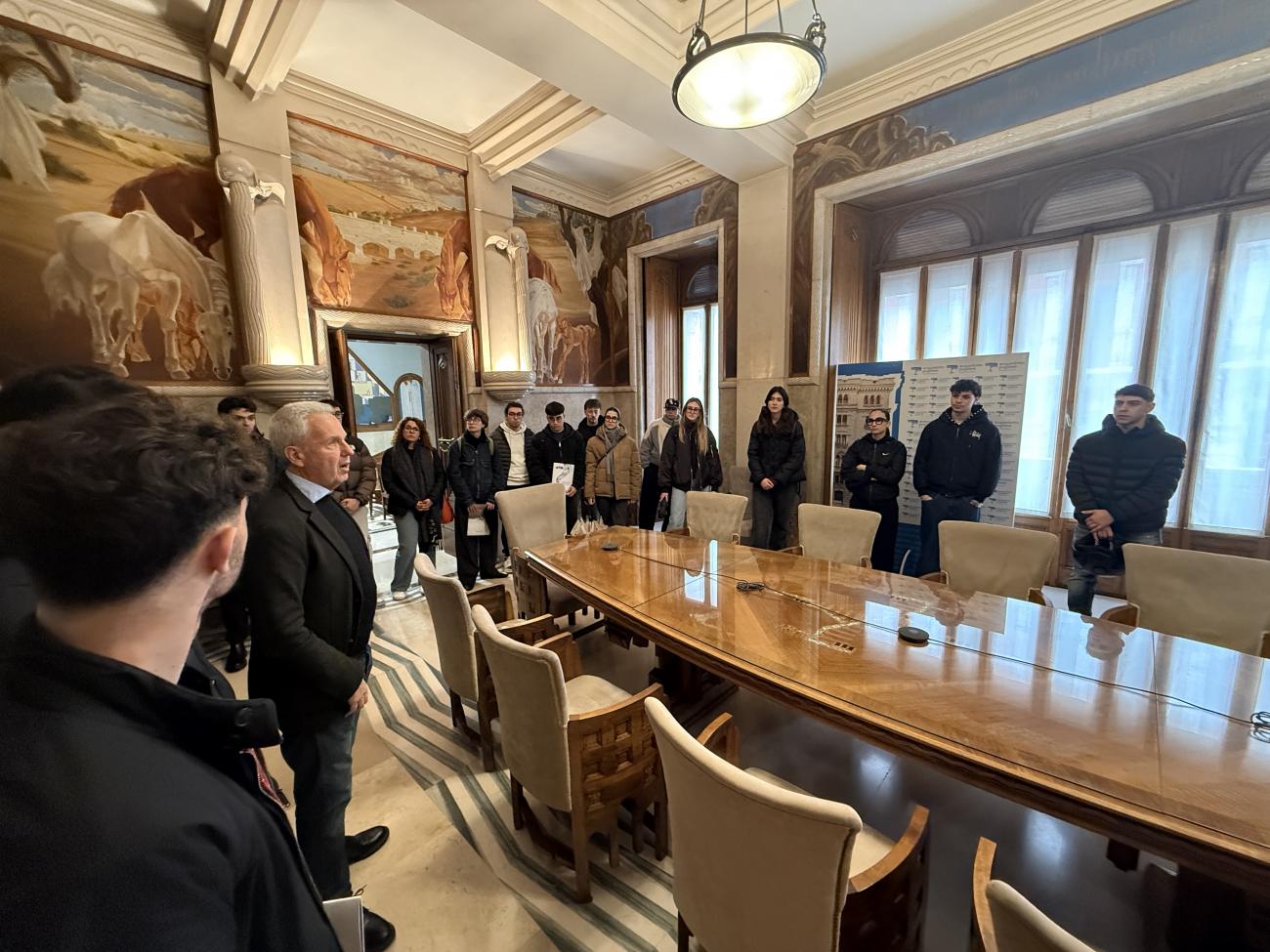
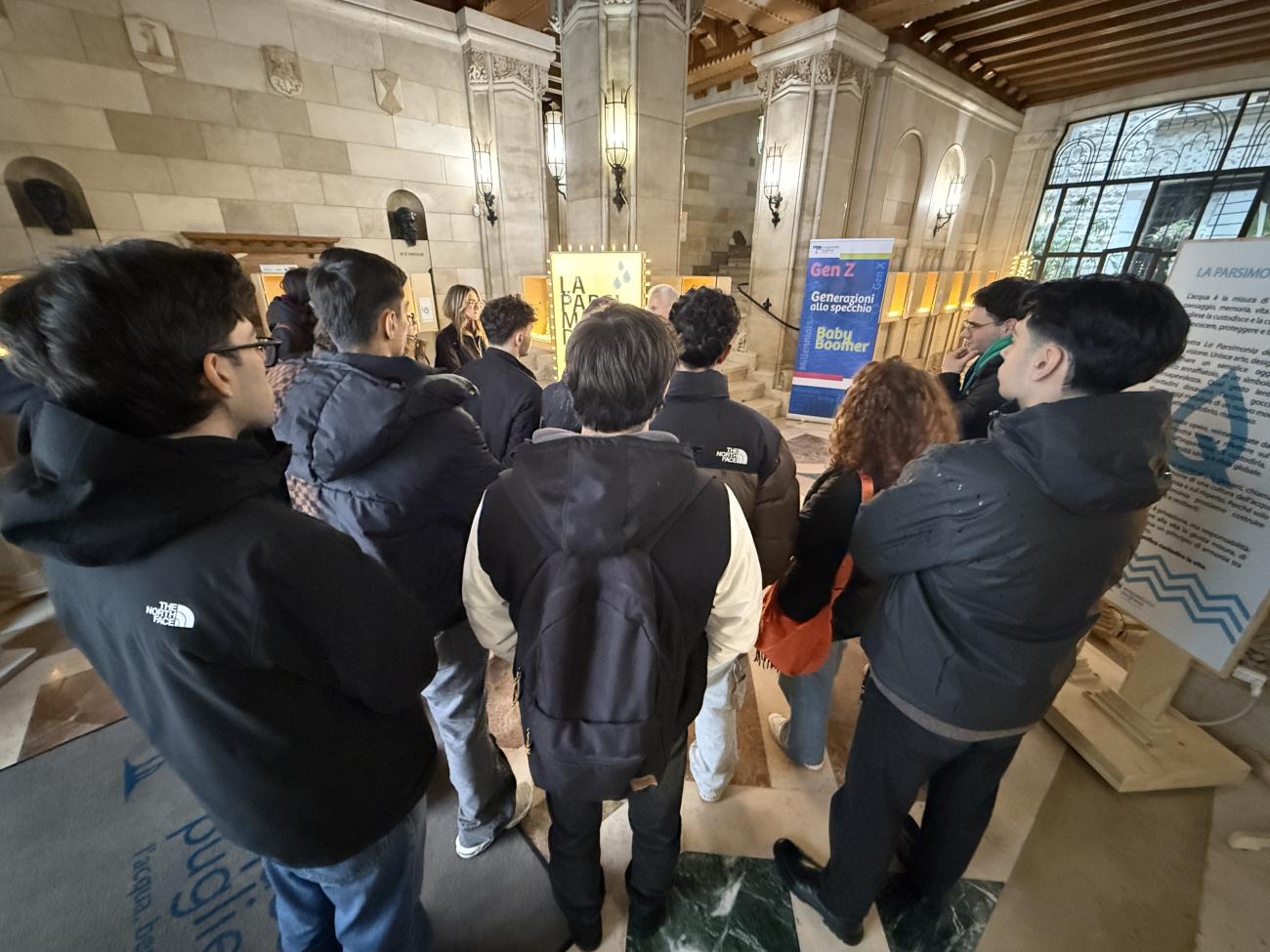
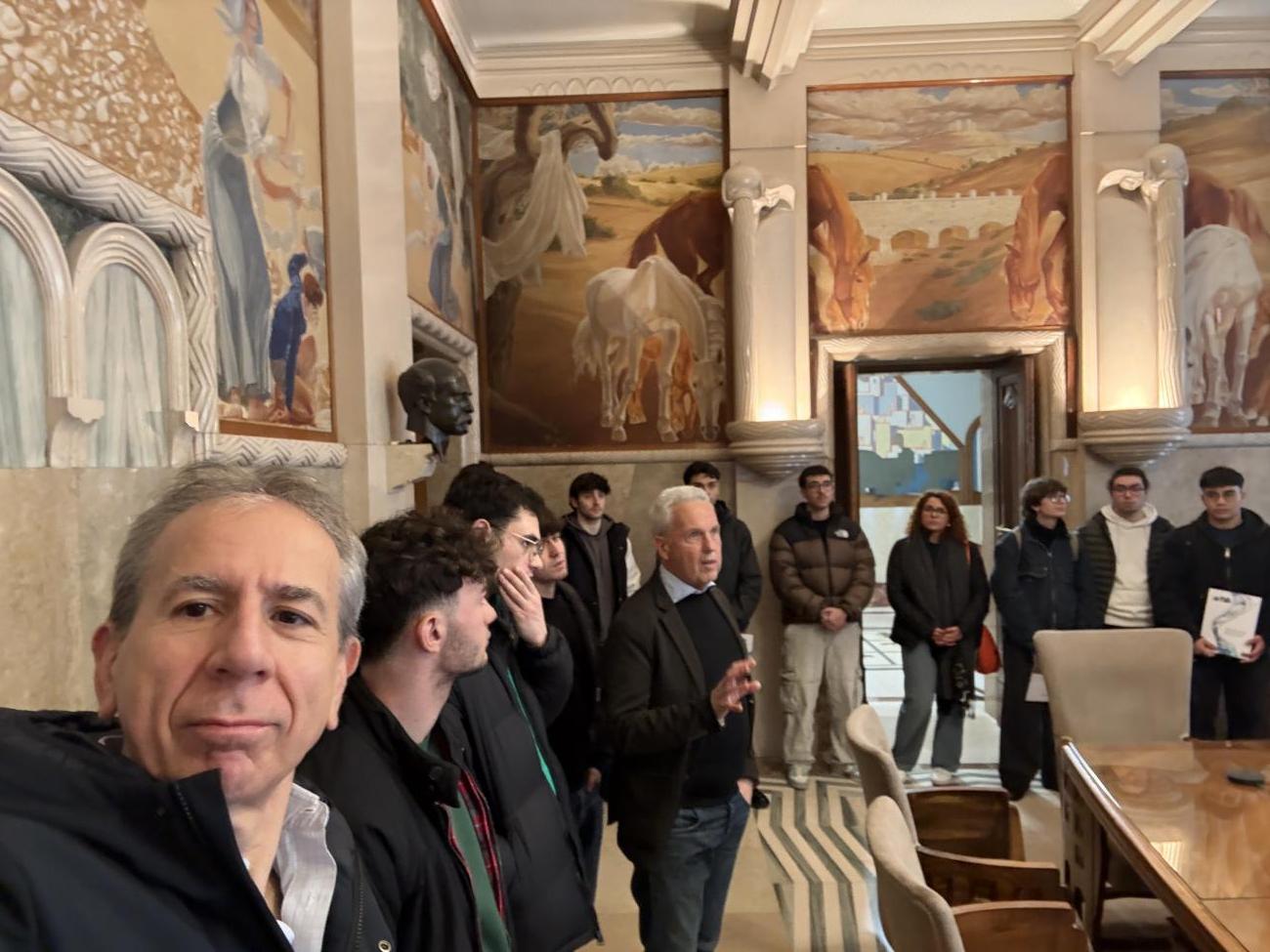
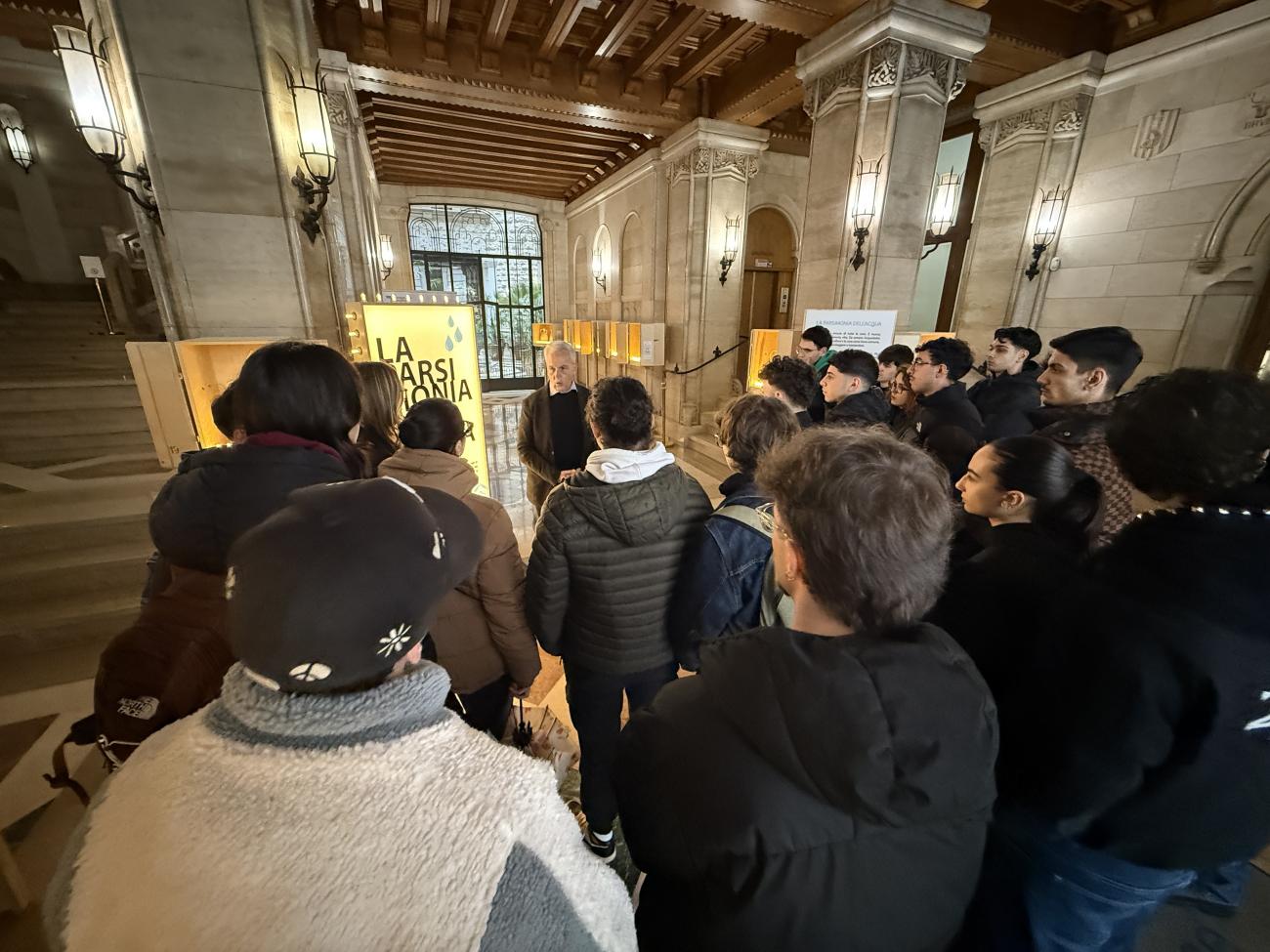
The guided tour of the Historic Palace of the Apulian Aqueduct is part of the Environmental Hydraulics course taught by Prof. Michele Mossa, within the Civil and Environmental Engineering degree program (Environmental Engineering track) in Bari. The building stands as a concrete symbol of the major project aimed at bringing water to Apulia, transforming a region historically lacking in water resources and improving the living conditions of its inhabitants.
Construction, led by engineer Cesare Brunetti, began in 1927 and was completed in 1932. The palace is designed in Apulian Neo-Romanesque style, echoing local architectural traditions both in its decorative elements and in the materials used, often inspired by the region’s most renowned monuments.
While the rusticated façade conveys a sense of solidity and austerity, the interiors—designed by Duilio Cambellotti in a late Liberty style—are more elaborate and richly decorated. The central theme is water, which recurs in the large frescoes of the Council Hall, in the flooring, and in the intricate wood and mother-of-pearl inlays found in over 140 original pieces of furniture.


 2
2



 LIC - Coastal Engineering Laboratory